
Match Point! How Business Leaders Build Sales High Performance through Deep Trust
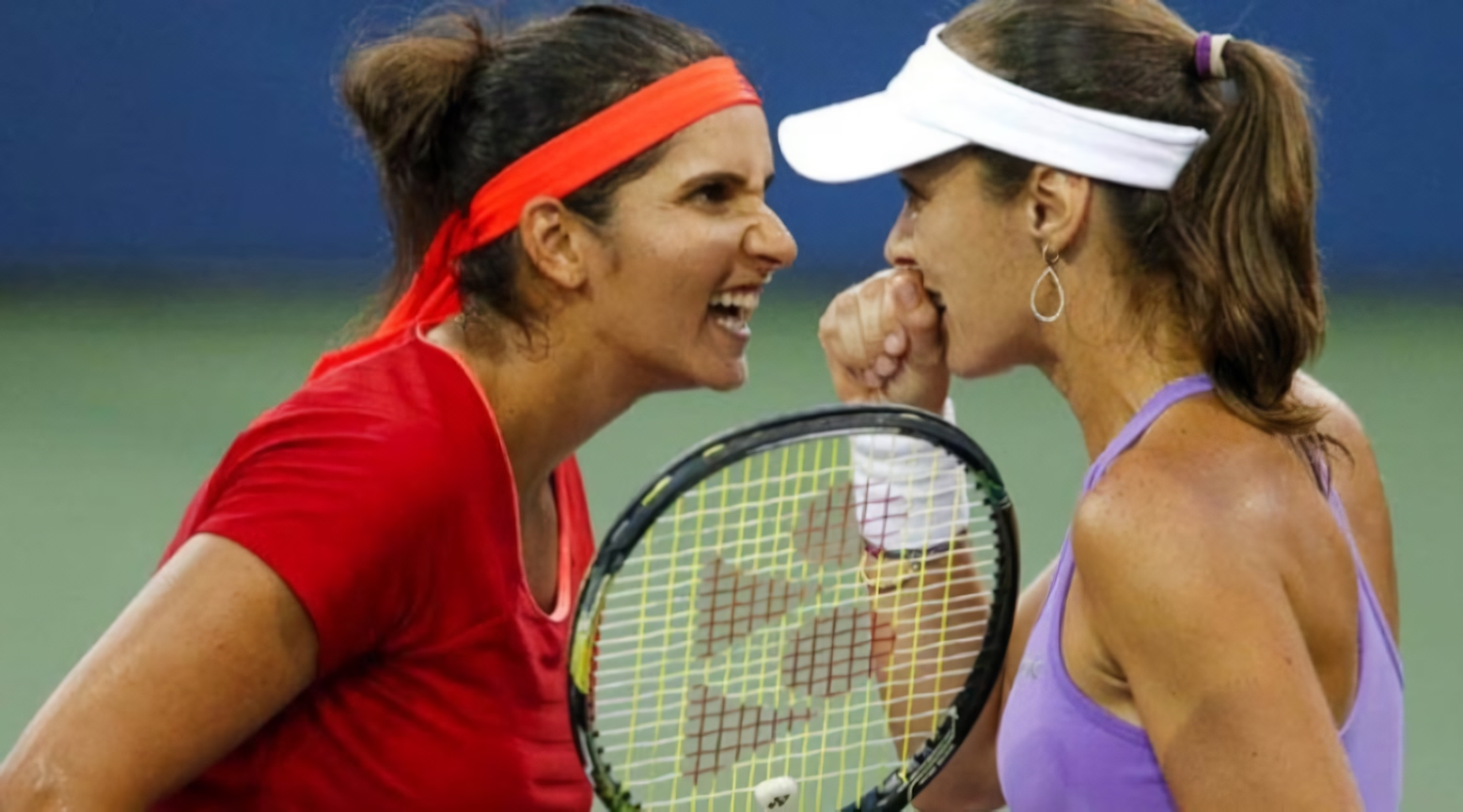
I made it back onto the tennis court last week. Rusty, but swinging. Somewhere deep in the second set it hit me: trust in B2B sales builds exactly like trust with a new doubles partner.
Early rallies are awkward; you’re working out how they move, communicate and make decisions. Over time, confidence builds… right up to the moment they toss you the ball on match point and say, “Close it.”
Trust follows a pattern. You earn it behaviorally, not through slogans or your logo

Credit: David Maister (with an @Arrowbow Twist!)
The Trust Equation reminds us:
- Credibility: do we have proven expertise?
- Relatedness: do we connect at a human level?
- Reliability: do we deliver, consistently?
- Self-orientation: are we here for them, not us?
This is how “trust” is nurtured. Ace right down the middle!
But the equation only works when leaders create the environment where trust can develop and build consistently, across the entire sales function, not just from a few top performers.
And that environment comes from the right balance:
- Structure (60%): sales process, cadence, tools, visibility; it drives consistency.
- Mindset (20%): curiosity, alignment, long-term thinking, customer centricity; it drives intent.
- Skillset (20%): questioning, listening, objection handling, persuasive language; it enables execution
When those three operate together, trust compounds. But what we have learnt at Arrowbow is that not all “trust” is equal, it is progressive and layered.
Stage One: No or Little Trust (Neutral & Transactional)
This is where almost every commercial relationship begins (noting that trust is easier and faster via a “referral”). Still there is no earned history, no shared rhythm, very little proof of value or problems being solved – just a whole lot of potential.
Common Stage One signals:
- They keep conversations short
- They ask for pricing early
- They withhold detail or context
- They compare providers silently
What matters here is reducing perceived risk, not persuading. Trust begins through following a consistent process, showing up on time and being prepared, documenting next steps clearly and by providing early value before asking for deeper commitment… just stay on the baseline!
Outcome: Reduce perceived risk & create professional confidence
Stage Two: Trust Flowing in One Direction
Here, you trust them to engage, but they’re still working out if they trust you. This stage relies heavily on mindset and intent.
Sales behaviours that accelerate trust:
- Listening more than speaking
- Identifying true needs, not assumed needs
- Offering the right solution, not the biggest one
- Being willing to recommend a down-sell if it’s a better fit
This is where many teams fall down because they “go for that tricky overhead smash”; they sell for the quarter, not the relationship. When a customer senses your motivation is aligned to their success, trust naturally begins to deepen.
Outcome: Demonstrate intent and alignment before expecting reciprocity
Stage Three: Established Trust
Now there’s rhythm. Information flows more openly, decisions speed up, and conversations shift from features to value and strategy.
At this point, skillset matters most:
- Clear articulation of value
- Framing up the commercial trade-offs
- Navigating objections with poise
- Co-designing solutions, not pitching them (being visionary)
This is where trust starts driving performance, not just access.
Outcome: Enable faster decisions, richer conversations & co-designed solutions
Stage Four: Advocacy & Deep Trust
This is high-performance territory, here trust transforms from relational to strategic:
- They invite you into planning conversations
- They introduce you to other divisions or markets
- They bring you into board or executive discussions
- They refer you to peers because they want you to win (true advocacy)
This is match-point trust, the moment a partner tosses you the ball, confident you’ll serve it out. You’ve got this! At this point, trust becomes a growth engine, not a sales tactic.
Outcome: Turn customers into active advocates who fuel growth.
The Leadership Responsibility
If you want trust to scale across your business and with your customers:
Build the structure. So trust is consistent, repeatable and measurable.
Coach the mindset. So conversations are customer-led, not forecast or budget driven.
Develop the skillset. So the team can earn commercial confidence through their capability and not your persuasion.
High performers don’t win every point, they win the right points. Roger Federer won 54% of points across his career, yet won 82% of matches. Sales is the same: trust wins the big points when it matters, the “big moments”